Simplifying complex due diligence data into clear, actionable insights for faster evaluations.
Year:
2023
Timeline:
4 weeks
Team Members:
Anushka Jadhav
My Role:
User Research · Workflows · IA · Concept Generation · Wireframing · Visual Design


Overview
Citibank, a multinational investment bank headquartered in New York City, conducts a rigorous Due Diligence process to evaluate potential clients and financial products.
This case study explores the transition of Citibank’s Due Diligence manual workflow into a fully digital experience. The goal was to streamline analysis, centralize critical information, and support faster, more confident decisions by reducing complexity and improving usability for internal teams.
Problem
Analysts were spending a lot of time finding and organizing information instead of actually analyzing it.
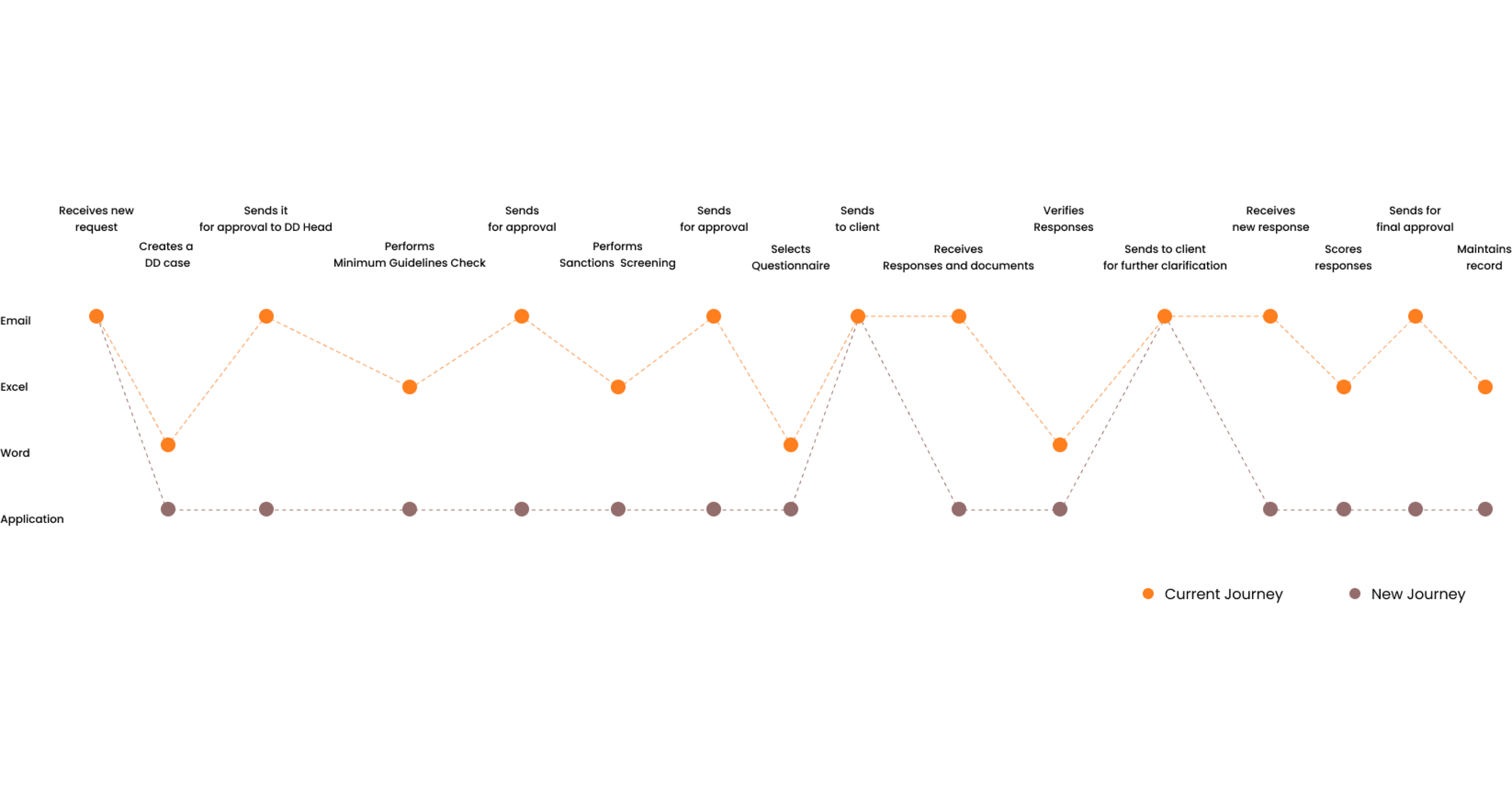
The existing process relied on multiple tools—documents, spreadsheets, emails—and a rigid workflow that didn’t match how analysts worked in real life. As a result:
Important insights were easy to miss
Too many workflows scattered all over different medium
Reviews took longer than necessary
Collaboration took excessive time
This created risk for both the business and the users making decisions.
What made this hard?
We had four weeks. That's it.
The stakeholders were busy, so direct access was limited. Most of our information came through product owners and a handful of user interviews where we watched analysts actually work through their daily tasks.
But here's what made it interesting: this wasn't just about building a new tool. These workflows had evolved over years. People had adapted to the chaos. Our job was to untangle it all without making things worse in the transition.
Goals
Reduce the time spent per case


Research & Discovery
The focus of research was to understand how analysts actually work, not how the process looked on paper.
Methods:
Stakeholder questionnaire
User interviews with analysts
Workflow walkthroughs
Competitive and domain research
Meet the users
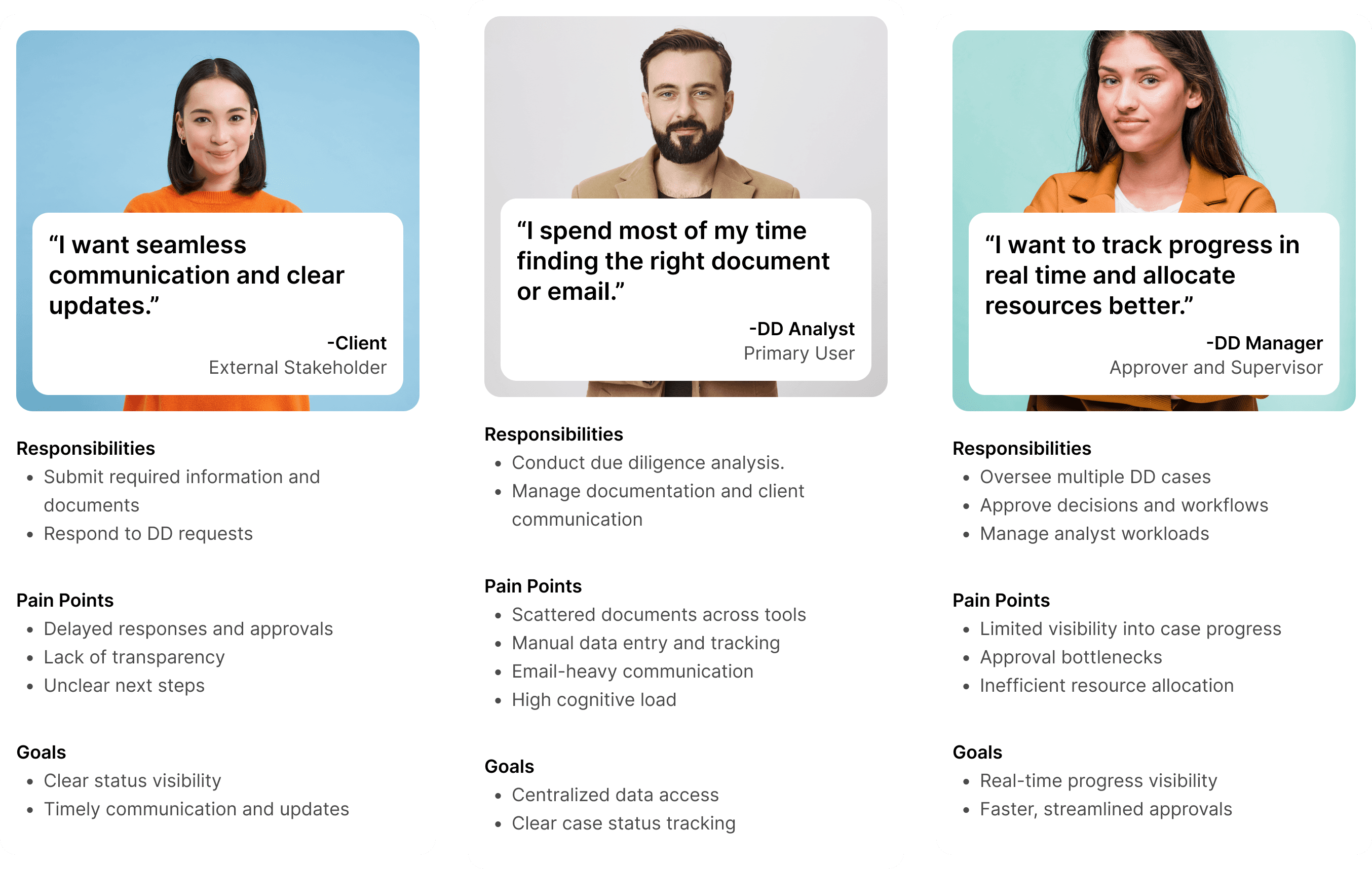
The user base comprises three key roles: a DD analyst, who creates and manages the due diligence process; a DD manager or head, who oversees the process and grants necessary approvals; and the clients, who provide the required information.

Key Insights
Key patterns identified from user interviews that directly informed product strategy and design decisions.
Fragmented workflows create operational blind spots
Due diligence work is spread across 6+ different systems, forms, files, and emails, making approvals hard to track and slowing progress.
The real problem was organization
Thousands of loosely organized folders make finding the right information time-consuming and unreliable.
Information overload increases cognitive load
Analysts must process large volumes of unsynthesized data, reducing focus on critical risk evaluation.
Email-based communication creates friction
Long email threads delay responses, obscure context, and hinder efficient collaboration.
From Insights to Experience Strategy
Shifting the experience from information storage to insight generation
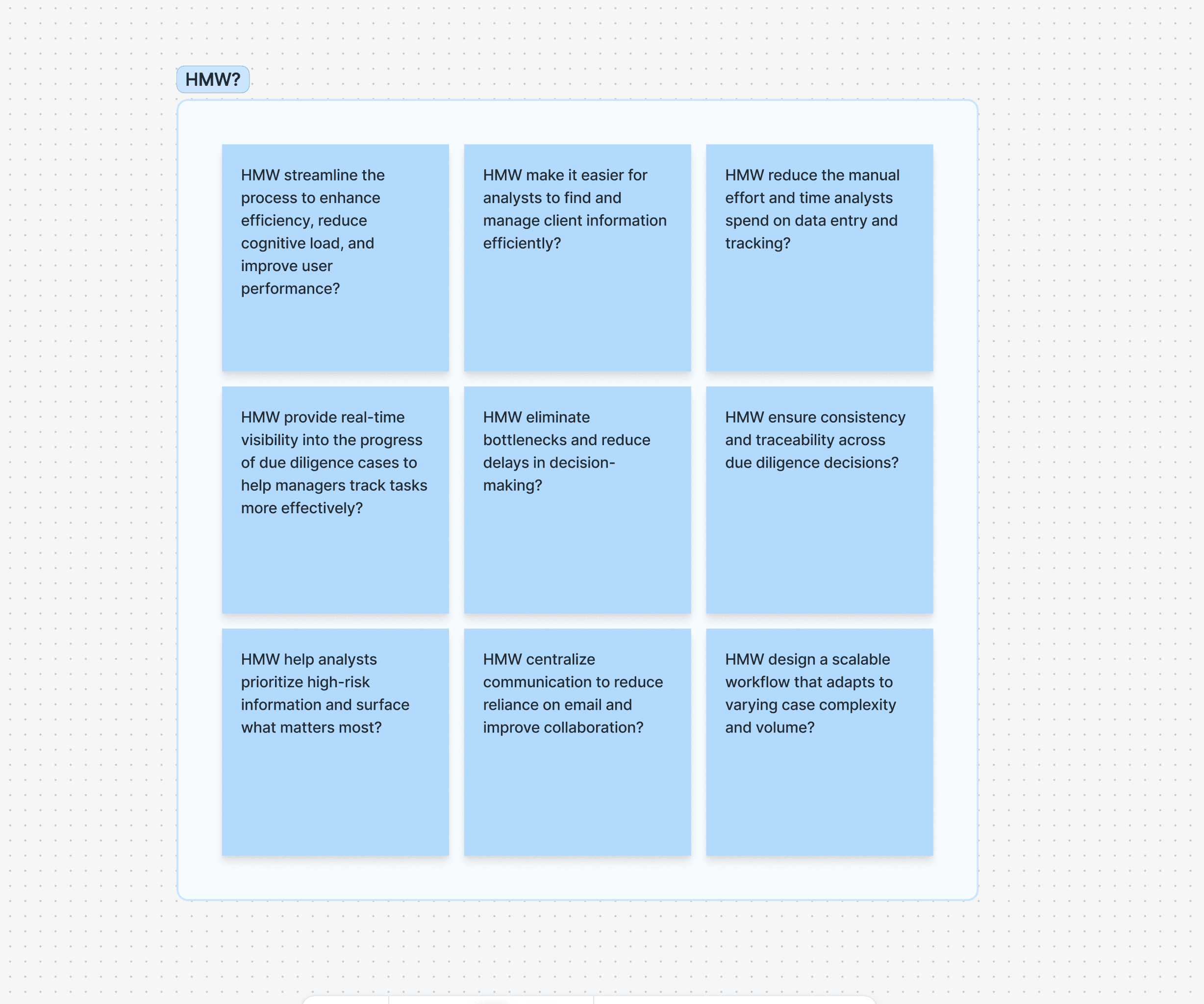
How Might We questions defined the strategic opportunities, while current vs. future journeys and flows illustrated how the experience needed to change. The future-state experience reimagines due diligence as a streamlined, flexible workflow designed to surface what matters early and reduce effort.
The design strategy focused on:
Making risk visible early
Reducing mental effort
Keeping collaboration in context
Together, these principles aligned user needs with business goals and guided all design decisions that followed.
How might we create a single source of truth for due diligence operations while reducing effort required to manage requests, approvals, and documentation?
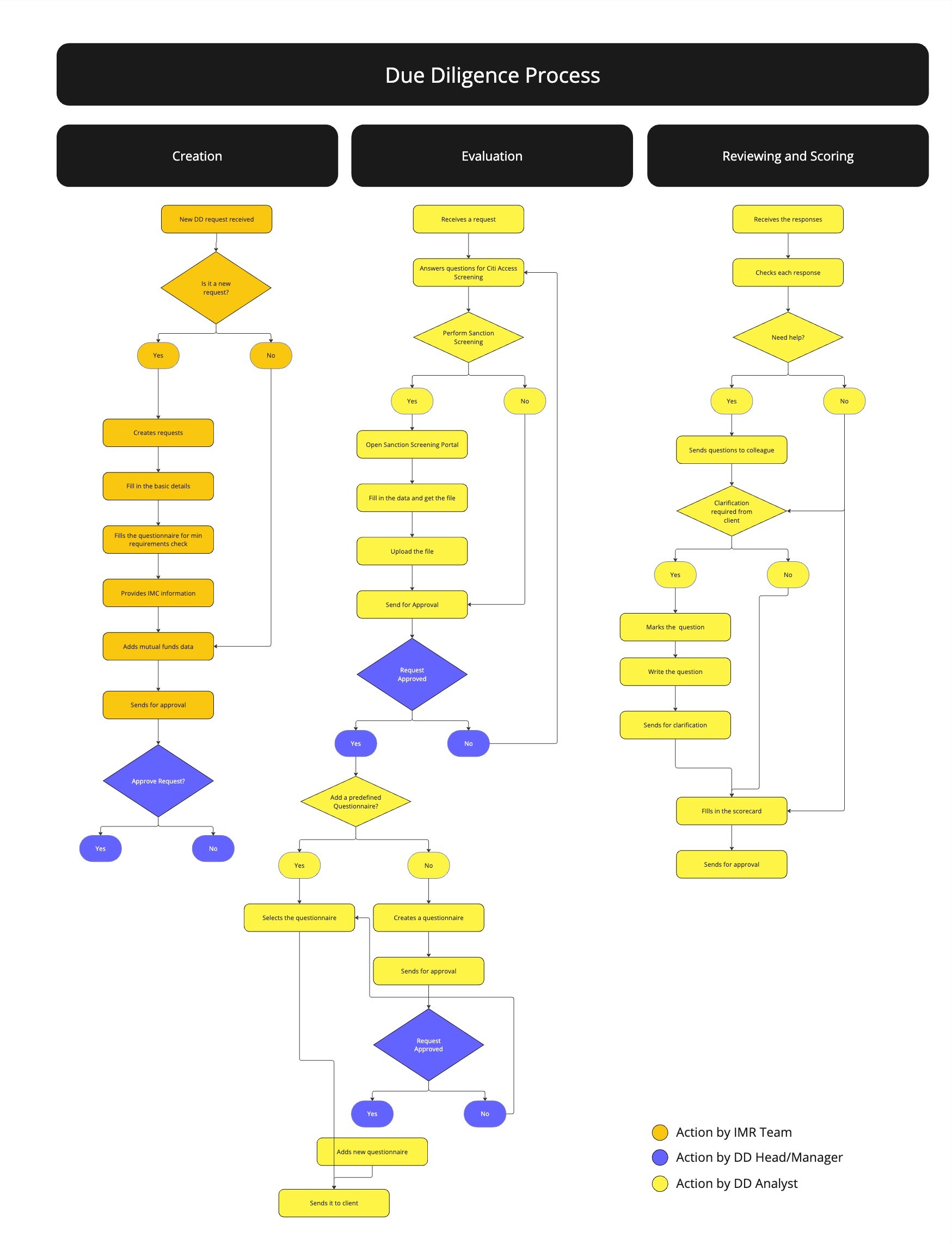
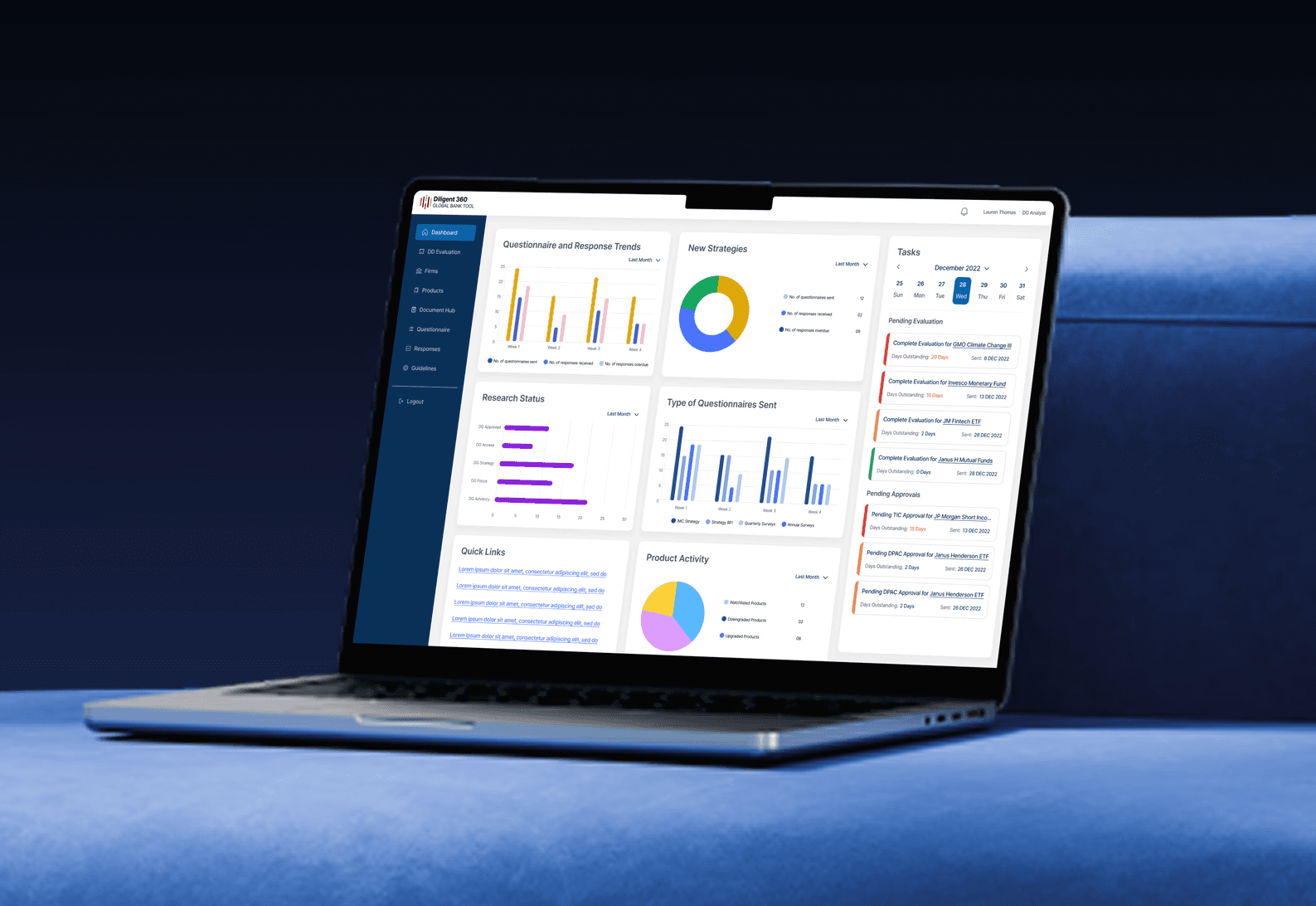
This platform transforms due diligence into a streamlined, decision-focused experience—reducing cognitive load, improving visibility, and enabling teams to move with clarity and control.
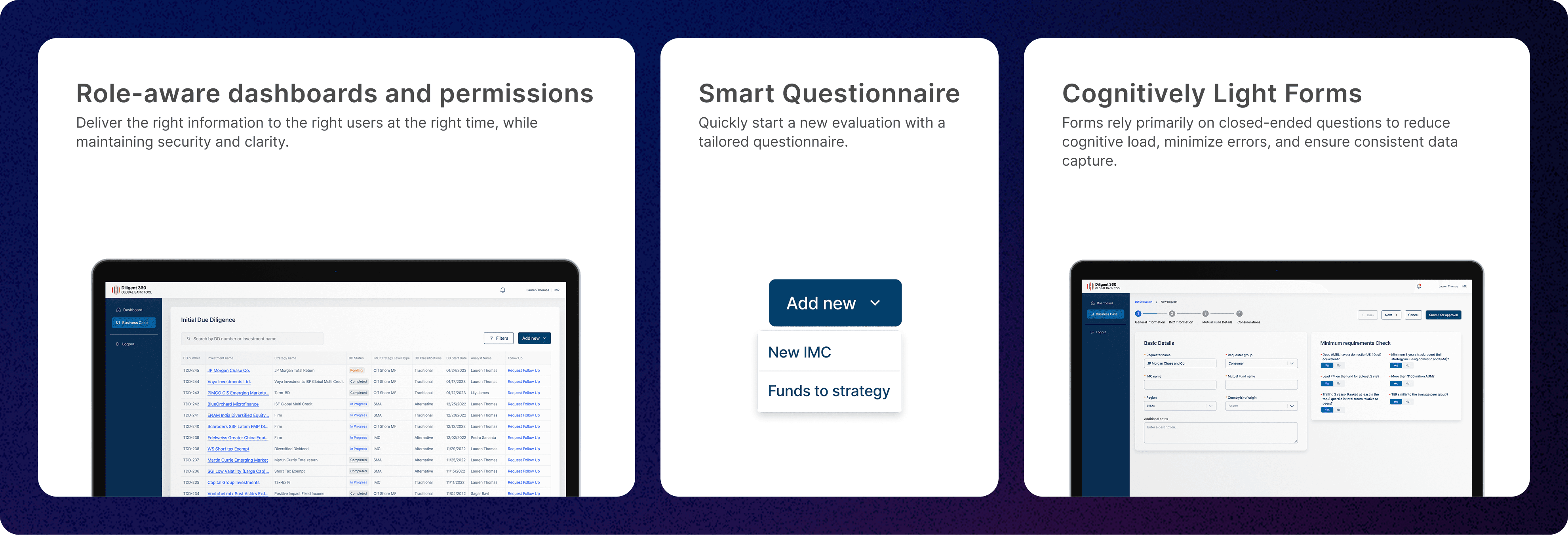
Due diligence cases can be created in minutes, not hours. Analysts start with only what’s essential and progressively add detail as the case evolves—without breaking flow or duplicating work.
➡️ Shift: From form-heavy setup → lightweight, progressive entry

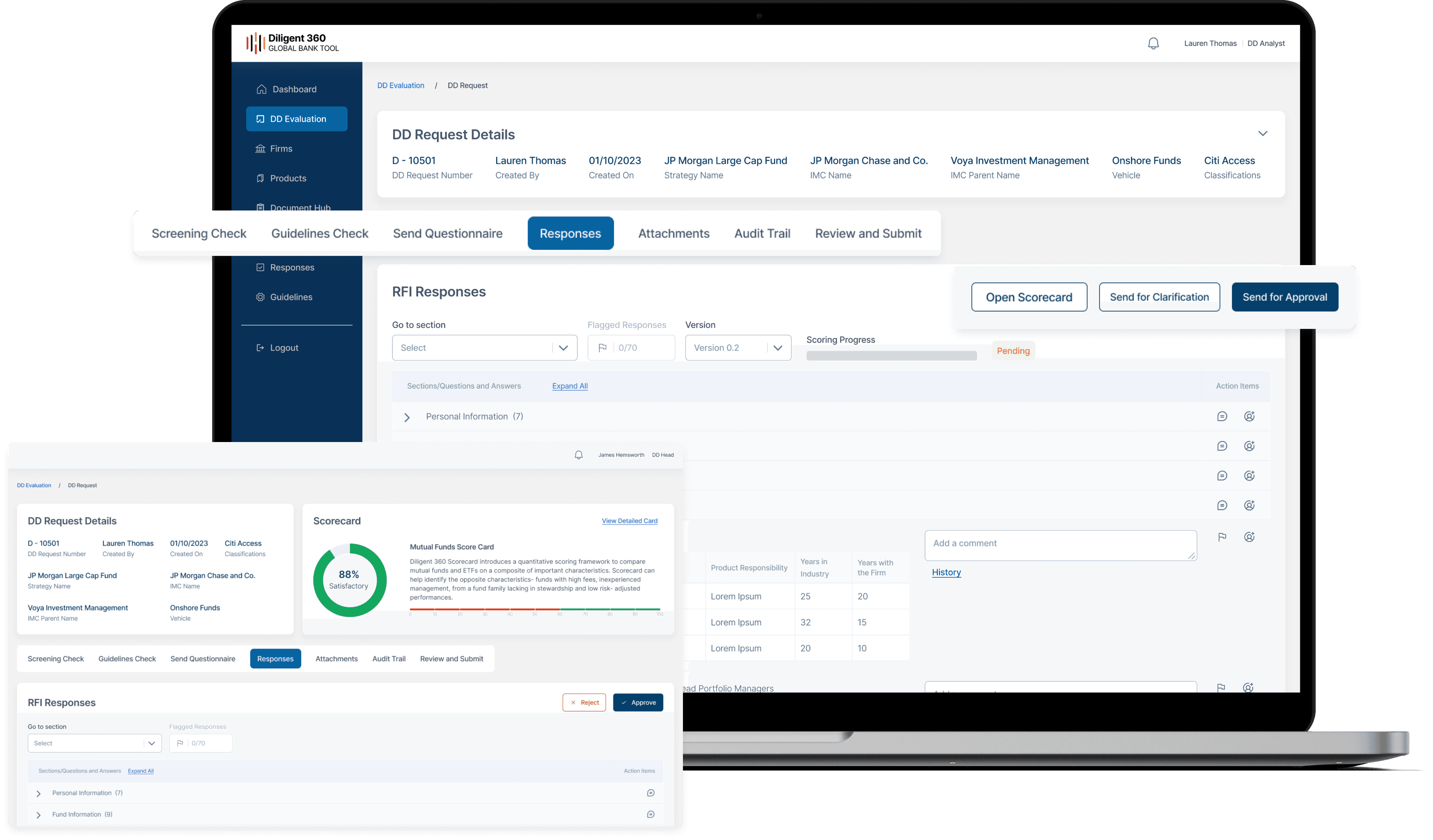
All case activity—tasks, documents, approvals, and communication—lives in one continuous workflow.
➡️ Shift: From fragmented tools → one source of truth
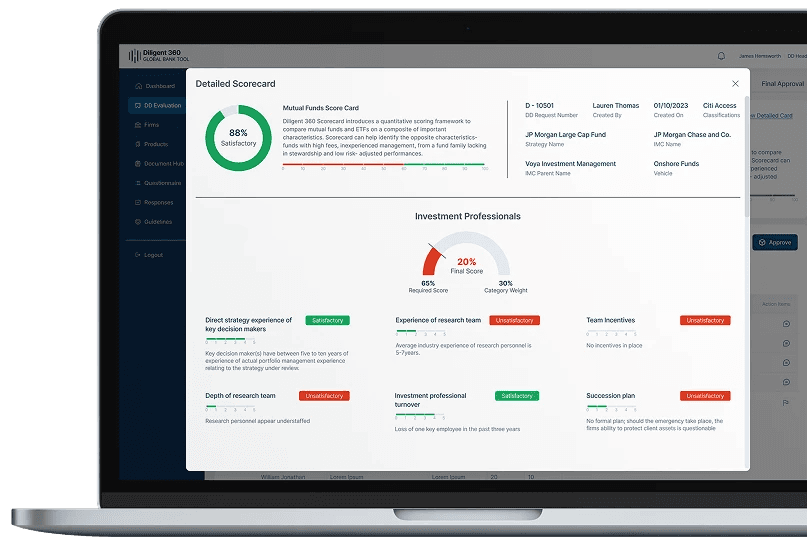
Complex reports are transformed into clear, digestible visualizations—making insights easy to grasp at a glance. Users can quickly interpret data, identify issues, and make informed decisions without navigating dense spreadsheets.
➡️ Shift: From cognitively heavy Excel sheets → intuitive, insight-driven visuals

How We'd Measure Success
Implementation wasn't part of our scope, but we outlined what success would look like:
Speed improvements:
How long it takes to find documents (hoping for 80% reduction)
Time from case creation to analyst assignment (target under 24 hours)
Approval turnaround (from days to hours)
Quality improvements:
Less missing or wrong information in submissions
Fewer back-and-forth messages per case
What I learnt
Limited access forced us to be smarter about research
We couldn't interview everyone, so we had to make every conversation count. Watching people work in context taught us way more than formal interviews ever could have.
You're not just designing screens
This platform would only work if people actually changed how they worked. That meant designing for the transition, not just the end state. It needed to feel familiar enough to be approachable while being different enough to actually solve the problems.
What I'd Do Differently Next Time
Run diary studies
We only captured snapshots of work, not the full experience of managing cases over weeks. Would've been valuable to see how the pain points evolved over time.
Prototype the approval flow earlier
We designed it based on our research, but I wish we'd tested it with actual managers sooner. Would've been good to validate that our approach actually felt better than email before getting too far.
Talk to more clients
We focused heavily on internal users (analysts and managers) but didn't spend enough time with clients. Their perspective on transparency deserved more attention.
+
+
+

Let's Talk
Curious what we could build together? Let’s turn bold ideas into meaningful, high-impact experiences. Drop me an email at khuwalneha@gmail.com to learn more — or just to chat over a cup of coffee.
+
+
+